
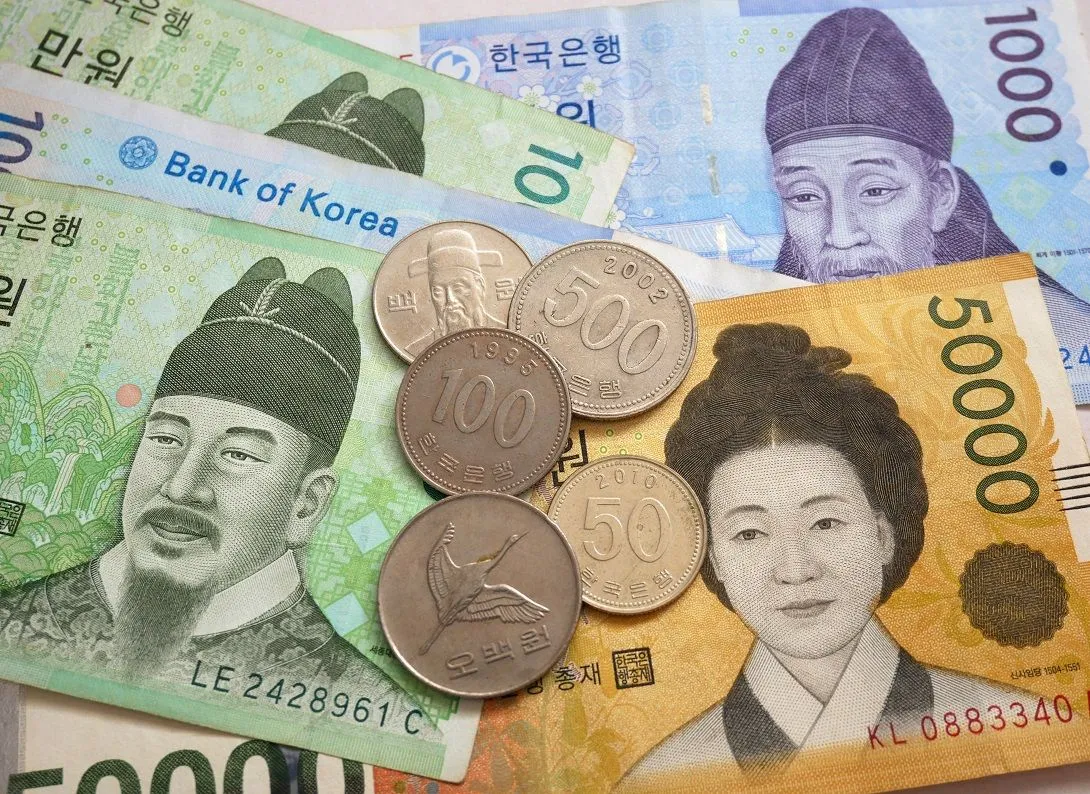
Korean Currency: A Practical Guide for Foreigners
Korean Currency: A Practical Guide for Foreigners. For foreigners visiting South Korea or planning an extended stay, an understanding of the country’s monetary system is essential. If you’re traveling to South Korea for a short period of time, you’re expected to use the country’s currency just like you would in any other foreign country, but if you’re planning a longer stay, you’ll need to become more familiar with it and how to use it.
Of course, financial transactions in a new country can sometimes be complicated and difficult, and a basic knowledge of the local currency can greatly simplify the process. In this article, we’ll introduce you to the types of Korean currency, how to use them, and helpful tips to make financial transactions in South Korea more accessible to foreigners. Check out the third installment of The Complete Guide to Living in Korea for Foreigner – equals, Money in South Korea: A Practical Guide for Foreigner, for very basic currency information.
Basics of Korean currency
The basic unit of currency in South Korea is the won (₩). Currency consists of banknotes and coins, each with a different denomination.
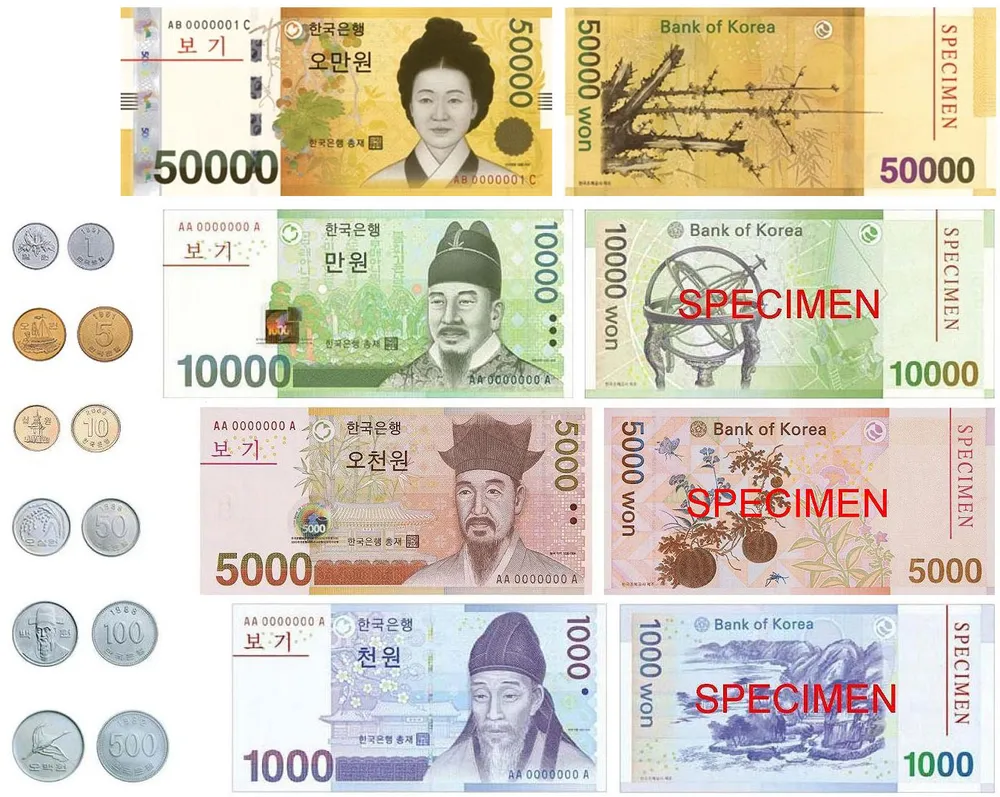
Bills
- Face value: 50,000 won, 1,000,000 won, 5,000,000 won, and 1,000,000 won bills are used. The value of 1,000 won is similar to the value of a US dollar. As of January 2024, 1350 won = 1$.
- Design: Each bill features famous South Korean figures and cultural symbols, and comes in different colors and sizes. Compared to the size of the US dollar, South Korean bills are slightly larger. The 50,000 won bill has Sinsa Imdang at 154mm * 68mm, the 10,000 won bill has King Sejong the Great at 148mm * 68mm, the 5,000 won bill has Yi Yi at 142mm * 68mm, and the 1,000 won bill has Yi Hwang at 136mm * 68mm.
Coins
- There are coins of face value: 500 won, 100 won, 50 won, and 10 won. These are actually the four most common coins, although there are also 5 and 1 won coins.
- Use: They are mostly used for small transactions and are given as change in most stores. You can use bills and get paid in coins as change if you’re buying something.
Top tips for using Korean currency
Cash and cards
- The ubiquity of card use: Credit cards are widely accepted in most shops, restaurants, and cafes. Visa, MasterCard, and American Express are commonly accepted. South Korea has more credit card penetration than any other country in the world, and most stores accept credit cards. Be aware that there are some shops that only accept credit cards without cash.
- Need for cash: While credit cards are ubiquitous, there are some places that only accept cash. In general, traditional markets, some small shops, and street vendors prefer to use cash.
Currency exchange and ATMs
- Use a currency exchange: Currency exchange offices are located at airports, major tourist destinations, and shopping centers and are open during normal business hours.
- Use an ATM: ATMs are available at banks and convenience stores to withdraw cash. Most ATMs offer English-language instructions. Banks are usually open from 9 to 4, but ATMs are available 24 hours a day.
Microtransactions
- Utilize coins: You can use coins for small transactions, such as bus fares, public phones, and vending machines.
- Change: When making small purchases, you’ll receive change if you don’t pay the exact amount.
Money tips and tricks
Beware of fake Korean currency
- Identify fake currency: Fake currency is very rare in South Korea, but you should be cautious when using high denomination bills. Highly counterfeited 5,000 won, 10,000 won, and 50,000 won bills have a hologram on the front that displays a map of the Korean Peninsula, a taegeuk pattern, and a four-legged stool depending on the angle of view. The serial number has also been changed from Hangul+numbers to Roman+numbers to facilitate investigations when counterfeit bills are found overseas. The map of the Korean Peninsula also shows Dokdo Island alongside Ulleungdo Island.
Understanding South Korea’s monetary system is an important first step for foreigners to get a better start on life in South Korea. We hope this guide will give you the information you need about financial transactions in South Korea and help you be financially proactive in your new environment.