
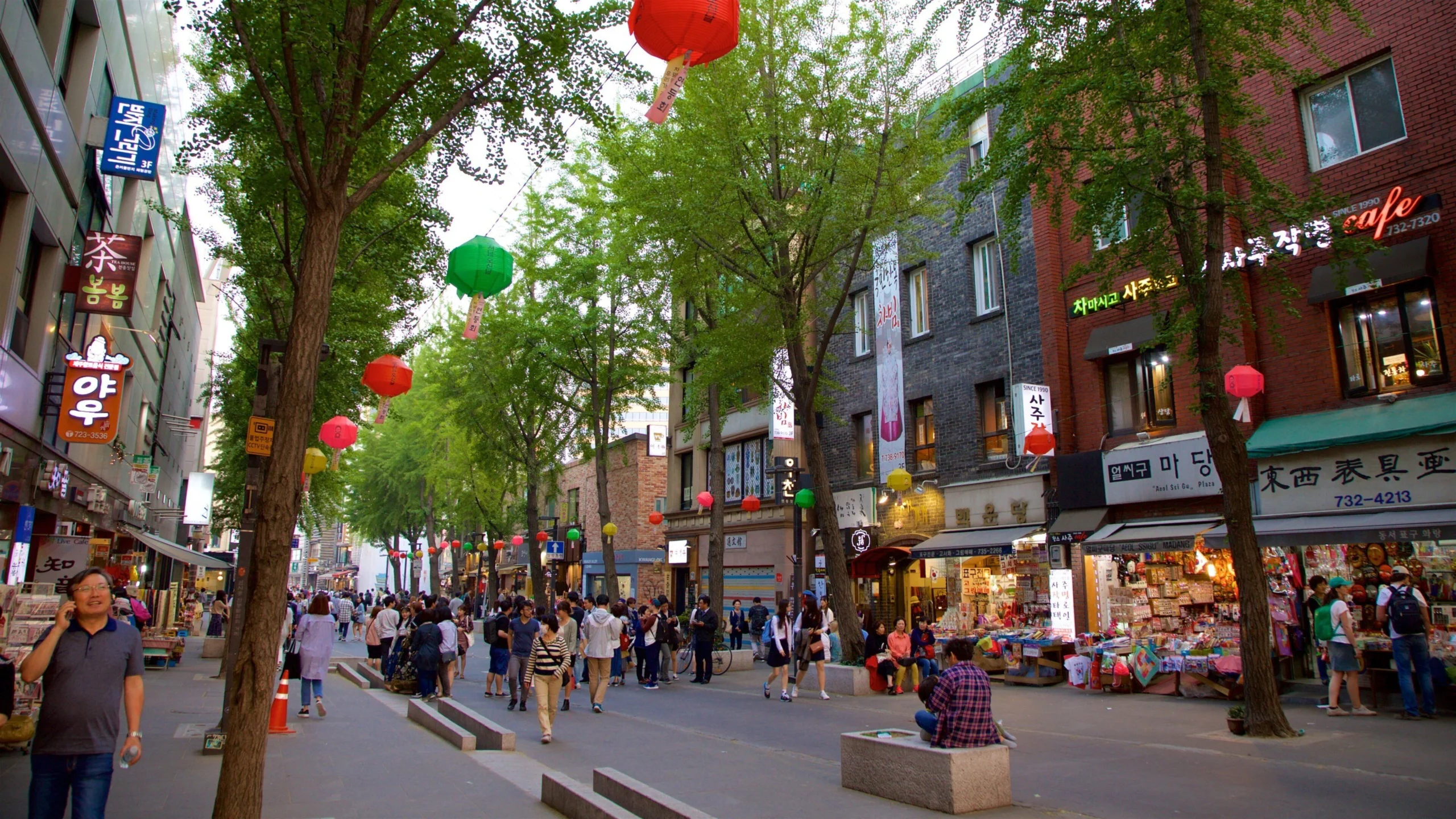
Seoul Itinerary for Foreigners: Today’s Itinerary in One Line
This is a walkable one-day course where you enjoy “Korea-ness (traditional crafts, tea houses, temples)” in Insadong in the morning, and “hanok vibes + trendy cafes/restaurants” in Ikseondong from afternoon to evening.
Most of it is free or doable on a low budget (paid options are optional), and it’s covered by just 2–3 subway stations—so it’s a low-fail plan even for a foreigner’s first trip to Seoul.
At-a-Glance Itinerary (Recommended Schedule)
| Time | Route | Highlight |
|---|---|---|
| 10:00 | Jogyesa Temple → Enter Insadong | Reset your mind at a city-center temple + a great photo spot |
| 11:00 | Walk Insadong Main Street | Browse traditional goods, calligraphy, crafts + souvenir shopping |
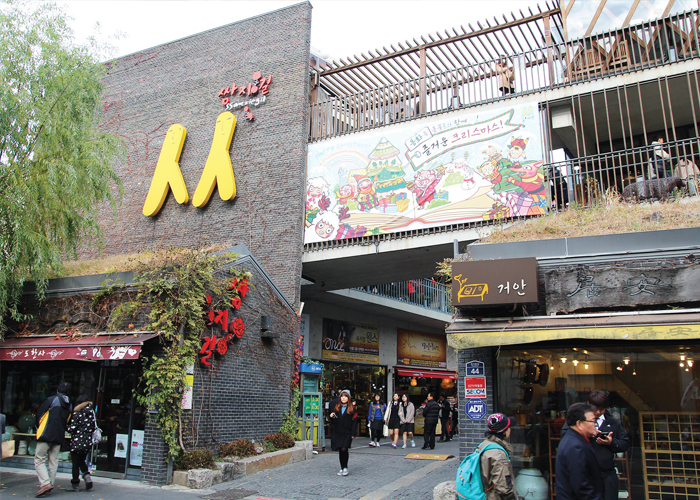
| 12:00 | Ssamziegil | A “one loop and you’re done” layout = shopping + exhibits + rooftop photos |
| 13:00 | Lunch (Insadong alleys) | Korean food / traditional desserts / tea house |
| 14:30 | Option 1) Museum Kimchikan / Option 2) Kyung-In Art Gallery / Option 3) Unhyeongung Palace | Rainy-day / hands-on / quiet garden-style stops |
| 16:30 | Ikseondong Hanok Street | Hanok alley vibes + cafes/desserts |
| 18:00~ | Ikseondong dinner → (Optional) Cheonggyecheon Stream | Wrap up with evening 분위기 too |
1) Jogyesa Temple: Start at a “24-hour temple in the heart of Seoul”
When you start your day in central Jongno, Jogyesa Temple instantly shifts the mood. There’s official guidance that the Daeungjeon Hall is open 24 hours, so it’s great to drop by briefly (even late). (Jogyesa Temple)
However, access to specific areas may vary depending on temple schedules such as services and prayers, so I recommend quietly looking around. (Visit Seoul)
Tips When Visiting with Foreign Friends (Manners change the trip quality)
- Indoors (main hall), stay quiet; for photos, check posted signs
- Incense/candles are purely an “experience”—there’s absolutely no pressure
- During lantern season (around Buddha’s Birthday), photo spots increase dramatically (and so do the crowds).
2) Insadong Main Street: Where tradition looks like “life,” not just “tourism”
Insadong brings together traditional tea houses, galleries, restaurants, and street stalls, and it’s often introduced as being open year-round / always accessible, making it easy to fit in even on days when “timing is awkward.” (VISITKOREA – Imagine Your Korea)
How to Enjoy Insadong Without Regrets (Foreigner 기준)
- Start with small, light souvenirs: hanji notebooks, postcards, traditional-pattern trinkets, tea
- Even if you go into just 1–2 side alleys, the traditional tea-house vibe changes completely
- If you want a “traditional feel,” go for a Korean set meal/soupy dishes for lunch; if you want something “lighter,” adjust with dessert + tea
3) Ssamziegil: The easiest “course-style” spot to enjoy in Insadong
When walking around Insadong with foreign friends, Ssamziegil is truly convenient.
Its spiral (walk-up) layout minimizes the “Where do we go next?” 고민, and lets you take in crafts, small goods, hands-on activities, and exhibits all at once.
Hours & Admission—Just the Essentials
- Hours: 10:30–20:30 (VISITKOREA – Imagine Your Korea)
- Admission: Free (some experiences are paid) (VISITKOREA – Imagine Your Korea)
- Since there may be notices about closing on the actual holiday day, I recommend checking announcements before visiting. (Visit Seoul)
4) Lunch & Snacks: How to balance “tradition + trend”
There’s one trap in this itinerary.
If you eat too much in Insadong, you won’t have room for Ikseondong cafes/desserts.
Recommended Balance (Highest satisfaction, based on experience)
- Lunch: 70% full with Korean food (about a 7 out of 10 on fullness)
- Afternoon: In Insadong, have just one tea/dessert item, and wrap up at Ikseondong with a “key cafe”
5) (Optional) Three afternoon options that make the trip feel “deeper”
Option A. Museum Kimchikan: Foreigners’ #1 reaction—“the kimchi universe”
Right in the middle of Insadong, this is a place where you can do kimchi exhibits + experiences, so satisfaction is high when you’re with foreign guests.
- Hours: Tue
–Sun 10:00–18:00 (last entry 17:30) (kimchikan.com) - Closed: Every Monday + some public holidays/long holiday periods (kimchikan.com)
- Admission (adult): 5,000 KRW (varies by age) (kimchikan.com)
- Individual visits are usually possible without a separate reservation (but docent tours/groups are recommended to inquire) (kimchikan.com)
- Audio guide: Provided via QR, with multilingual support including English (bringing earphones is recommended). (kimchikan.com)
Option B. Kyung-In Art Gallery: Take a break in a “quiet courtyard”
Even though it’s right in the center of Insadong, once you step inside, the vibe suddenly feels like a garden.
- Hours: 10:00–18:00, admission free (Visit Seoul)
- Closed: New Year’s Day / Seollal / Chuseok, etc. (Visit Seoul)
Option C. Unhyeongung Palace: Taste “palace vibes” without the crowds
When it’s hard to fit in Gyeongbokgung or Changdeokgung, Unhyeongung is a light option that gives you a “quick palace taste.”
- Viewing hours (summer season Apr
–Oct): 09:00–19:00 (last entry 18:30) (Seoul News) - Viewing hours (winter season Nov
–Mar): 09:00–18:30 (last entry 17:30) (Seoul News) - Closed: Every Monday (may change if it’s a public holiday) (Seoul News)
- Admission: Free (Seoul News)
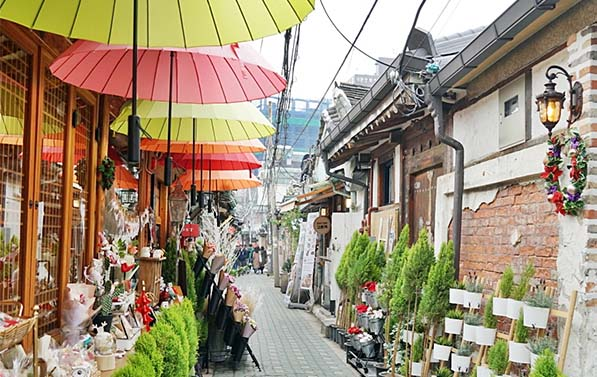
6) Ikseondong Hanok Street: Seoul’s Representing alley where “tradition became hip”
Ikseondong is introduced as a place where cafes and restaurants moved into narrow alleys lined with hanok, becoming a neighborhood where tradition and modernity coexist. (Official Website of the)
The Seoul Hanok Portal introduces Ikseondong as an in-town hanok village, guiding that you can find it by walking up the alleys from Exit 6 of Jongno 3-ga Station. (Hanok Portal)
What makes Ikseondong especially great
- It’s not “hanok = museum,” but a living commercial area, so exploring is fun
- Why photos look great: hanok textures by day, lighting vibes at night
- As of 2018, it’s described as a commercial area with around 330 shops densely packed. (Hanok Portal)
Manners Tip for “Walking Quietly” in Ikseondong (Really important)
- The alleys are narrow, so avoid stopping in groups / speaking loudly
- If you’re lining up, stand close to the wall (consider residents’ passage)
- Weekend evenings can mean long waits, so weekday afternoons are the cleanest (experience-based tip).
7) (Optional) Closing Walk: Tapgol Park or Cheonggyecheon Stream
Two options for when you “want to walk just a bit more” after Ikseondong.
Tapgol Park (daytime / before sunset)
Seoul’s park guidance introduces Tapgol Park as Seoul’s first modern park and the birthplace of the March 1st Movement. (parks.seoul.go.kr)
Since visiting hours may be provided differently depending on the season, it’s good to check on-site/official guidance. (NCulture)
Cheonggyecheon Stream (evening / night view)
An easy-to-connect “downtown Seoul night view” course from Insadong and Ikseondong.
(This is more about vibe than operating hours—just walk wherever your feet take you.)
“Real-World Tips” for Visiting with Foreigners (A real checklist from the Representing)
1) Using a tourist information center for just 3 minutes makes your day easier
The Jongno-gu Tourist Information Center is near Insadong, and its hours are 안내 as 10:00–18:00. (Jongno Culture Platform)
It’s introduced as having staff who can provide foreign-language guidance such as English, making it great for basic info like maps, recommended routes, and restroom locations. (Jongno Culture Platform)
2) Today’s itinerary is mostly OK “even without cash”
However, some traditional goods/stalls may not accept cards, so having a bit of small cash is safer.
3) Best times for good photos (vibe optimization)
- Insadong: around 10–11 a.m. (crowds build up less)
- Ikseondong: 4–6 p.m. (the natural light + lights-switching moment looks beautiful)
Estimated Costs (rough guide)
- Basic (mostly free): from 0 KRW~ (just meals/cafe costs)
- Including paid options:
- Museum Kimchikan adult 5,000 KRW (kimchikan.com)
- Unhyeongung Palace free (Seoul News)
- Kyung-In Art Gallery free (Visit Seoul)
Wrap-up: Especially recommended for
- If it’s your “first time in Seoul” but palaces alone feel insufficient
- If you want shopping, photos, and cafes all in one day
- If you don’t want to move around too much in one day (solve it within Jongno)
FAQ (Seoul Itinerary for Foreigners)
Q1. How long does it take to walk from Insadong to Ikseondong?
It’s mostly a walkable distance, so it doesn’t feel too burdensome even if you move slowly while sightseeing along the way. A Representing approach to Ikseondong is via Exit 6 of Jongno 3-ga Station. (Hanok Portal)
Q2. What time does Ssamziegil close?
Its hours are 안내 as 10:30–20:30. (VISITKOREA – Imagine Your Korea)
Q3. Can I visit Jogyesa Temple at night?
According to Jogyesa’s official English 안내, the Daeungjeon Hall is open 24 hours, so it’s a good place to stop by even late. (Jogyesa Temple)
However, detailed access may vary depending on temple schedules. (Visit Seoul)
Q4. Why is Ikseondong so popular?
Because you can enjoy, all at once, an atmosphere where hanok lines continue through narrow alleys, with cafes and restaurants inside—creating a vibe where tradition and modernity coexist. (Official Website of the)
Q5. Is this itinerary okay on a rainy day?
Yes. Insadong in particular has many indoor spots, and adding an indoor option like Museum Kimchikan (Tue–Sun 10:00–18:00) makes the day much easier. (kimchikan.com)
Q6. Is Unhyeongung Palace paid admission?
Based on Seoul City guidance, it’s introduced as having free admission. (Seoul News)
Q7. What are Insadong’s opening hours?
Insadong Culture Street is often 안내 in tourism info as open 24 hours / operating year-round. (VISITKOREA – Imagine Your Korea)
However, individual businesses (cafes, galleries, shops) each have their own hours.
Q8. If I want to add a royal palace to an Insadong–Ikseondong itinerary?
If you have more time, a great extended course is to add themes within the same Jongno area: Gyeongbokgung Palace & Gwanghwamun, Changdeokgung Palace & Huwon (Secret Garden), Deoksugung Palace & Jeongdong-gil, and Bukchon & Seochon. (I’ll continue organizing this as a series.)

K-Name Studio: Create your perfect Korean name based on your personality and style.
What’s My K-Beauty Personal Color?
WeBring Service : Provides personalized services to foreigners living in Korea
Exclusive offer: Introducing foreign car rental in Korea, WeBring-SoCar