
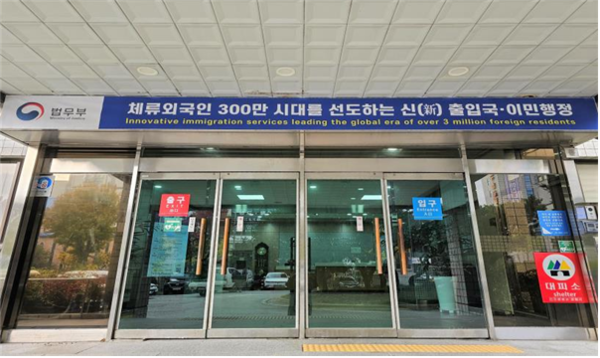
If your documents get tangled even once at an immigration (Immigration · Foreign Resident Affairs Office) counter, the work for that day can easily fall into the “supplement request → revisit” route.
Do you know the most realistic way to prevent that? I’ll organize the key points that matter when preparing immigration documents.
It’s not so much “the documents themselves,” but the order you pull them out and how you bundle them.
Today, exactly the way I organize documents for my foreign clients in real life, I’ll walk you through—from A to Z—how to complete a “document folder” based on originals/copies/translations/apostille (or consular legalization).
1) Three “official principles” you should know first
① Documents issued overseas often require an “apostille or consular legalization”
In the immigration-related guidance on required supporting documents (Enforcement Rule appendix guidance), there is wording to the effect that documents issued overseas must be attached after receiving apostille verification from the issuing country’s government or consular legalization from a Republic of Korea diplomatic mission in the country of residence. (law.go.kr)
→ Conclusion: In many cases, overseas documents are not finished once you prepare only the “content”—the key is authenticity verification (apostille/consular).
② The principle is to submit originals, but they may be returned after verification
The same guidance also states that supporting documents should be submitted in original form as a principle, and that if unavoidable, the examiner may return them after confirming the originals, and may certify the copy as matching the original when necessary. (law.go.kr)
→ Conclusion: If you show up with “only a bunch of copies,” the flow at the counter can be interrupted by a request to present the originals.
③ Additional documents may arise during the review process
It also includes the point that, if deemed necessary during receipt/review, supporting documents may be added or removed. (law.go.kr)
→ Conclusion: That’s why your “document folder” should have a structure that can absorb what you prepared + on-the-spot supplements.
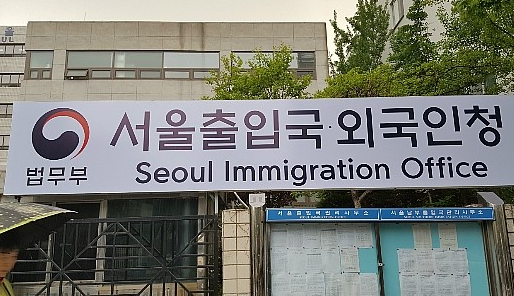
2) Apostille vs. consular legalization: which applies to my documents?
There is government guidance stating that, in order to use overseas public documents in another country, apostille or consular legalization procedures are required to have the document’s official effect recognized. (Overseas Koreans Agency)
- Apostille: A method that simplifies the consular legalization process among countries that are parties to the Hague Apostille Convention (Overseas Koreans Agency)
- Consular legalization: For non-member countries of the Apostille Convention (embassy/consulate legalization procedures are required) (Overseas Koreans Agency)
And for reference, Korea is 안내 as having joined the Apostille Convention on October 25, 2006, and it entered into force on July 14, 2007. (Overseas Koreans Agency)
✅ Practical tip: If you’re unsure whether “my country is a member,” first check with the issuing country’s government/embassy about whether apostille issuance is available. (If it’s a member country, the apostille route is generally faster.)
3) Translation documents: in many cases, it doesn’t end with “just the translation”
In an immigration notice (an example 안내 for medical certificates upon re-entry), it states that, in principle, Korean/English documents are required, but if circumstances require the document to be issued in a third-country language, a Korean or English translation + a translation confirmation must be attached, and that notarization is not required. (Immigration Office)
→ In other words, in practice, the combo “translation + translator confirmation (or a translation confirmation form)” may come up.
4) Now the main part: Build your “document folder” like this (hands-on template)
Supplies (best value setup)
- One 2-ring/3-ring binder (thick one recommended)
- 8–12 index tabs (color-coded)
- 15–25 transparent L-folders (to protect originals)
- Clips/binder clips (safer than a stapler)
- Post-its (labeling: “original/copy/for submission”)
- 2–3 “empty pockets” for extra documents (for supplement requests)
Core folder structure: “one item = one pack (packet)”
At immigration, documents are ultimately reviewed by “item”.
So I create one bundle for each document type (e.g., a degree certificate) in the order below.
✅ Standard order for a 1-pack (packet)
- Check cover (a cover page I attach)
- Copy (for submission)
- Translation (if any)
- Translation confirmation / translator info (in case it’s requested)
- Apostille/consular legalization copy
- Original (kept in a transparent holder; marked “Do NOT submit / For presentation”)
Point: At the counter, the flow is usually smooth when “submission” is done with copies/in the file, and “verification” is done by presenting originals. (Some tasks still follow the principle of original submission, so structure it so you always bring the originals too!)
5) Recommended index (tab) setup: matching the immigration counter flow
The structure below fits well for most tasks in common, such as foreigner registration, extension of stay, change of status of stay, etc.
Tab 0. Cover & today’s mission (1 page)
- Purpose of visit: e.g., D-2 extension / E-7 change / address change, etc.
- Reservation info (if any): date/time/office/task name
- My contact number + email
- “Today’s submission list” checkboxes
Tab 1. Identity
- Passport original (holder)
- Passport copy (photo page + visa/entry stamp-related pages)
- ARC original/copy (if applicable)
Tab 2. Forms
- Integrated application form (completed)
- Fee preparation memo (card/cash, etc.)
- ID photo meeting requirements (in an envelope)
Tab 3. Proof of residence (address)
- Lease contract copy
- Confirmation of residence/accommodation provision, etc. (if applicable)
- Supplementary materials such as utility bills/registry, etc. (depending on situation)
Tab 4. Affiliation proof (school/company)
- Certificate of enrollment / certificate of employment
- Transcript / tuition payment (international students)
- Employment contract / pay statements / four major insurances (workers)
Tab 5. Financial (balance · income) proof
- Balance certificate / transaction history
- Income-related documents (for visa categories that require it)
Tab 6. Overseas-issued documents (core apostille/legalization tab)
- Criminal record certificate
- Degree certificate / graduation certificate
- Overseas family documents (marriage/birth, etc.)
Since the immigration Enforcement Rule appendix guidance also mentions the point that “documents issued overseas require an apostille or consular legalization,” this tab is the area where the most problems occur. (law.go.kr)
Tab 7. Translations
- Align translations against the original text
- Translator info / translation confirmation (in case it’s requested)
- Terminology consistency sheet (name/school name/major name, etc.)
Tab 8. Other (for supplement requests)
- Several empty holders
- Extra printed copies of additional documents
- Additional explanatory sheet (statement of reason/cover letter draft)
6) The most common mistakes when organizing “overseas documents (apostille/consular legalization)”
An apostille is basically the concept of “certifying that the document is genuine,” and it is explained as intended to replace/simplify the former consular legalization procedure. (Ministry of Foreign Affairs)
But in practice, mistakes almost always happen in the organizing method.
Checklist: For each overseas document, confirm this first
- The apostille (or consular legalization) page is actually attached
- Consistency OK on whether the apostille is attached to the original or attached to a notarized copy
- You made and kept a separate copy of the apostille/legalization
- If there is a translation, no omission of apostille details (authority/number/date, etc.) on the translation
- Never remove staples/ribbons/seals (a key point for suspected tampering)
7) How to organize the “translation” folder to reduce supplement requests
As seen in immigration notice examples, in some cases they may require a translation + a translation confirmation while also stating that notarization is not required. (Immigration Office)
In other words, it’s safer to go with a translation credibility package rather than “just a translation by itself.”
Recommended translation packet (one set)
- Original-language copy
- Translation
- (If possible) Translator info/confirmation (signature, contact, date)
- Terminology consistency memo (optional): name spelling, official English names of institutions, etc.
In particular, if you make a translation mistake in “identifying information” like your name (passport name in English), date of birth, or document number, you will immediately get a supplement request.
8) Labeling rules that create a “3-minute finish” at the counter on the day
Even if your documents are perfect, if it takes 10 minutes to find them, the counter flow breaks.
This is how I label.
Label color rules (simple but powerful)
- Red = originals (for presentation, marked not to submit)
- Blue = copies to submit
- Yellow = translation
- Green = apostille/consular legalization
Top post-it phrases (paste them as-is)
- “ORIGINAL – DO NOT SUBMIT”
- “COPY – TO SUBMIT”
- “TRANSLATION ATTACHED”
- “APOSTILLE / LEGALIZATION”
9) Final checklist for an “immigration document folder” you can print and use as-is
On the night before your visit, just checking the items below gets you halfway there.
A. Basics
- Passport original + copy
- ARC original + copy (if applicable)
- Application form (integrated application form, etc.) completed
- Photo (recent) stored in an envelope
- Fee payment method prepared
B. Residence/Affiliation
- 1–2 types of address proof documents
- Affiliation proof such as enrollment/employment
- Additional proof such as contracts/pay/tuition (if needed)
C. Overseas documents (most important)
- Original overseas-issued documents
- Apostille or consular legalization (attached/connected to the original) (law.go.kr)
- Apostille/consular legalization copies stored separately
- Translation + (as needed) translation confirmation/translator info (Immigration Office)
D. Folder structure
- Documents are arranged by tab in the “search order”
- At least 3 empty holders (to handle additional documents)
- PDF backup on USB/cloud (apply filename rules)
FAQ (Immigration documents)
Q1. Do documents issued overseas always require an apostille?
It’s hard to say “always,” but the immigration submission document guidance (Enforcement Rule appendix) includes guidance to the effect that for overseas-issued documents, you should attach them after receiving apostille verification or consular legalization by a Republic of Korea diplomatic mission. (law.go.kr)
→ Realistically, it is often required for key overseas documents such as criminal records, degrees, and family relationship documents.
Q2. What’s the difference between an apostille and consular legalization?
The government provides comparative guidance: if it’s an Apostille Convention member country, the authentication process is simplified through an apostille, and if it’s a non-member country, you proceed with consular legalization. (Overseas Koreans Agency)
Q3. Do translations have to be notarized (notarized translation)?
It depends on the case. However, in an immigration notice example, for medical certificates in a third-country language, it was 안내 that a Korean/English translation + a translation confirmation is required, and notarization is not required. (Immigration Office)
→ That’s why, in practice, preparing the “translation + translation confirmation (translator info)” format first can help reduce supplement requests.
Q4. If I submit originals, will I get them back?
The Enforcement Rule appendix guidance includes the point that supporting documents should be submitted in original form as a principle, and that if unavoidable, the examiner may return them after confirming the originals. (law.go.kr)
→ So it’s more stable to design your folder so you “safely bring the originals, but keep the submission flow centered on copies.”
Q5. Do I really need to go this far with a folder? Can’t I just put everything in an envelope?
An envelope can work, but immigration is structured so that additional documents may arise during the review (documents can be added or removed if necessary). (law.go.kr)
On-site, “organization” often becomes “processing speed.”

K-Name Studio: Create your perfect Korean name based on your personality and style.
What’s My K-Beauty Personal Color?
WeBring Service : Provides personalized services to foreigners living in Korea
Exclusive offer: Introducing foreign car rental in Korea, WeBring-SoCar